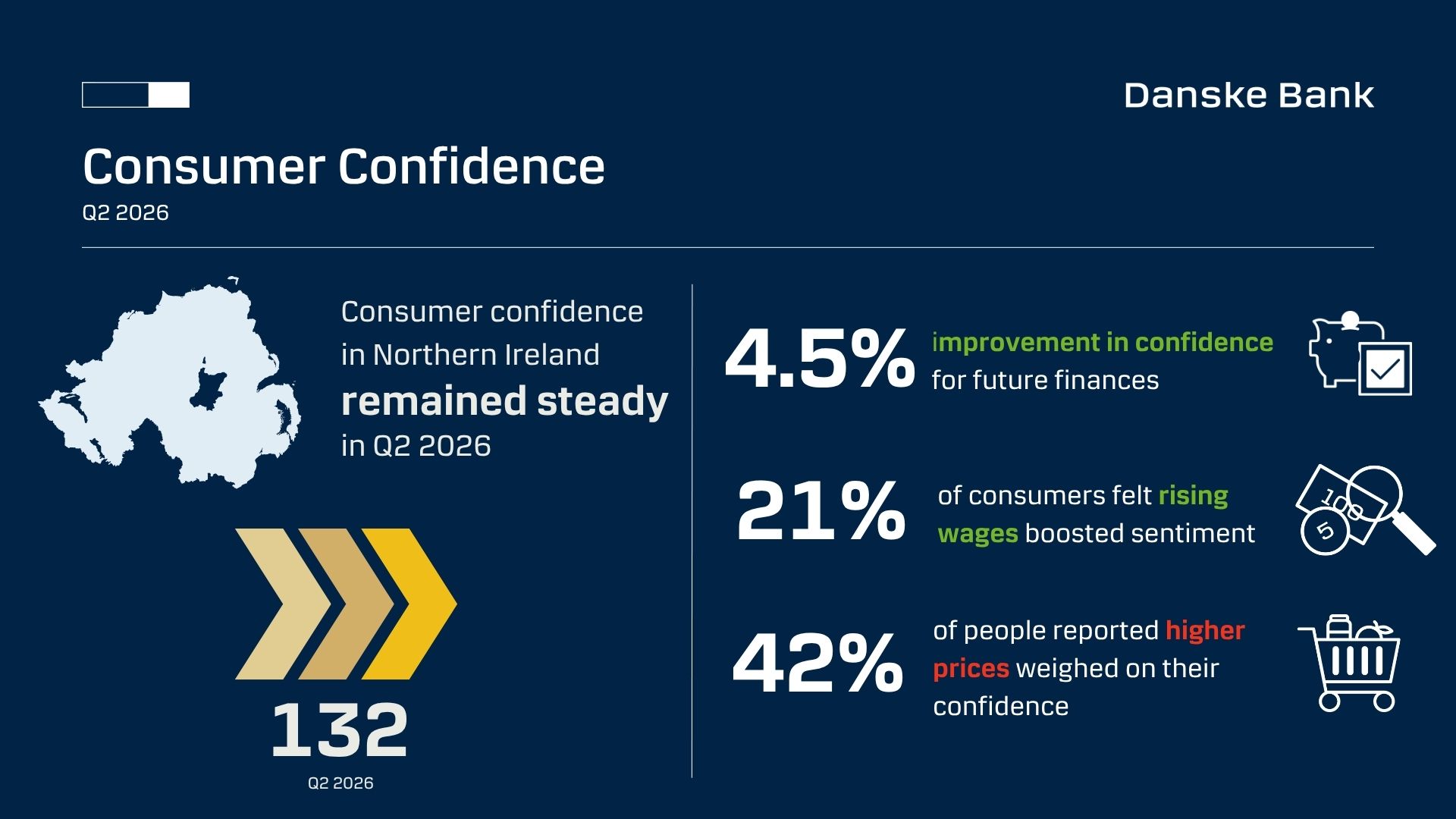
The Danske Bank Consumer Confidence Index increased one point from the previous quarter to a reading of 132, with people reporting feeling more positive about their current finances and financial outlook.
Just over one fifth of those surveyed (21%) said rising wages were positively impacting sentiment, with pay in Northern Ireland outpacing price rises over the year to June. However, 41% of people said high prices are still the main factor negatively impacting their confidence.
The survey showed that around one in three consumers expect to cut back on luxury spending this year (36%). While that remains a significant proportion of people, it is a noticeable improvement compared to sentiment throughout 2022 and 2023, when around half of respondents expected to reduce their spending.
The survey showed younger generations are driving this improvement in spending plans, particularly in the 18-24 age category.
Hannah Martin, Chief Economist at Danske Bank, said:
“Our Consumer Confidence Index has consistently shown that people are most influenced by direct impacts on their household finances.
“Higher prices and rising borrowing costs have played an important role in shaping confidence. This means that even a modest upward movement in inflation this year could impact on households that have already faced several years of elevated increases in living costs.
“The future path of inflation and interest rates are key watchpoints on how confidence will be impacted in the second half of the year.”
How people felt about their current financial situation when compared to their situation 12 months ago experienced the largest improvement in confidence this quarter, up 6 points quarter on quarter, suggesting household resilience despite price pressures.
But expectations around job security over the next 12 months showed a decline in confidence (down 4 points), despite the continued strength of labour market data.
Hannah Martin said:
“With pay in Northern Ireland outpacing price rises over the year to June, some consumers may have felt a little more money in their pocket. It is encouraging that a fifth of people surveyed said rising wages were positively impacting sentiment.
“But we can’t forget that between June 2021 and June 2026, the cost of many essentials across categories that measure food, non-alcoholic beverages, housing, water and fuel, have risen by around 40%.”
She added:
“With recent increases in prices largely driven by global events, it is not surprising that a larger proportion of consumers have reported that global risks were the main factor weighing on their confidence (17%).
“These global factors will continue to play an important role in shaping inflation and interest rate decisions, and so will be key in determining consumer confidence.”
View the full report here.